
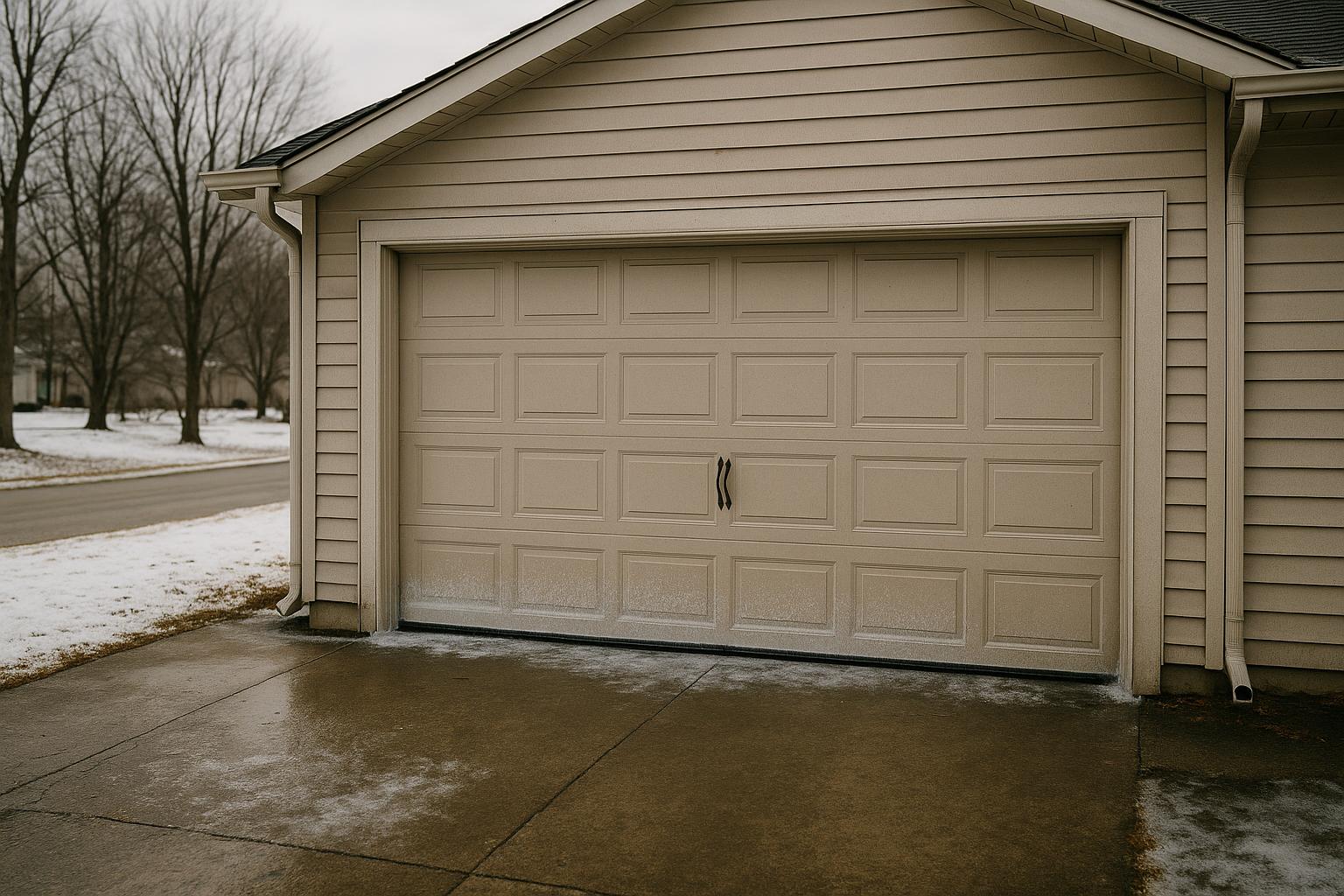
Winter and Your Garage Door Don't Always Get Along
If you've ever walked out on a freezing Indiana morning, pressed the button on your garage door opener, and heard it strain without the door budging, you're not alone. Cold weather is one of the most common reasons garage doors stop working properly, and it catches a lot of homeowners in Mooresville off guard every winter.
The good news is that most cold-weather garage door problems have straightforward causes and solutions. Some you can handle yourself, and others are best left to a professional. Let's walk through the most common reasons your garage door won't open when temperatures drop and what you can do about each one.
The Weatherstripping Is Frozen to the Ground
This is the number one reason garage doors get stuck in winter. The rubber weatherstripping along the bottom of your door is designed to create a seal against the ground to keep out drafts, water, and pests. But when temperatures dip below freezing, any moisture between that seal and your driveway can turn to ice, essentially gluing your door to the ground.
How to Fix It
- Never force the door open. If you hit the opener button and the door doesn't move, don't keep pressing it. Forcing a frozen door can damage the weatherstripping, the opener motor, or even the door panels themselves.
- Break the seal gently. Use a flat shovel or a heat gun to carefully melt or chip away the ice along the bottom edge. You can also pour warm (not boiling) water along the seal to loosen it.
- Prevent it from happening again. Apply a thin layer of silicone-based lubricant or cooking spray along the bottom weatherstripping before the next freeze. This creates a barrier that makes it harder for ice to bond.
The Metal Parts Have Contracted
Metal contracts in cold temperatures. That's basic physics, and your garage door is full of metal — tracks, springs, rollers, and hinges. When everything tightens up, the door can become harder to move. You might notice it moving more slowly than usual, making grinding noises, or getting stuck partway through its travel.
How to Fix It
- Lubricate moving parts. Use a silicone-based or lithium-based garage door lubricant on the springs, hinges, rollers, and tracks. Avoid WD-40 for this purpose — it's a solvent, not a long-term lubricant, and it can actually attract dirt and grime over time.
- Check the tracks for alignment. If metal contraction has shifted anything slightly out of place, the door may bind. Look for gaps between the rollers and the track or visible bends. If you see something off, it's best to call a technician rather than trying to bend the tracks yourself.
Your Garage Door Springs Have Lost Tension
Garage door springs do a tremendous amount of work. They bear the full weight of the door every time it opens and closes. In cold weather, the metal in the springs contracts and becomes more brittle, which can cause them to lose tension or even snap.
If your garage door feels unusually heavy when you try to lift it manually, or if your opener is straining more than normal, weakened springs could be the cause. A broken spring is usually obvious — you'll hear a loud bang from the garage, and the door simply won't open.
How to Fix It
Do not attempt to repair or replace garage door springs yourself. These components are under extreme tension and can cause serious injury if handled incorrectly. If you suspect a spring issue, call a garage door professional. Here in Mooresville, we handle spring replacements regularly and can usually get to you the same day.
The Opener's Grease Has Thickened
If your garage door opener uses a chain or screw drive, the lubricant on those components can thicken in cold weather, making the mechanism sluggish. You might notice the opener running but the door barely moving, or the door opening much more slowly than it does in warmer months.
How to Fix It
- Clean off old, thickened grease from the opener's drive mechanism.
- Apply a fresh coat of lubricant rated for cold temperatures.
- If your opener is older and consistently struggles in winter, it may be worth considering an upgrade to a belt-drive opener, which tends to perform more reliably in varying temperatures.
The Safety Sensors Are Misaligned or Blocked
Your garage door has two small sensors near the bottom of the tracks on either side. These photoelectric eyes detect obstructions and prevent the door from closing on something — or someone. In winter, these sensors can get knocked out of alignment by snow, ice, or even condensation fogging the lens.
How to Fix It
- Check that both sensor lights are lit and steady. A blinking light usually means misalignment.
- Wipe the lenses clean with a dry cloth.
- Make sure no snow, ice, or debris is blocking the sensor's line of sight.
- Gently adjust the sensors until both indicator lights are solid.
Your Remote Batteries Are Weak
This one sounds almost too simple, but cold weather drains batteries faster. If your garage door remote seems inconsistent — working sometimes but not others — try replacing the batteries before assuming something more serious is wrong. It's an easy fix that solves the problem more often than people expect.
When to Call a Professional
Some cold-weather garage door issues are quick DIY fixes. Frozen weatherstripping, dirty sensors, and dead remote batteries are all things most homeowners can handle. But if you're dealing with broken springs, a struggling opener motor, bent tracks, or a door that's completely stuck and you can't figure out why, it's time to call for help.
Trying to force a stuck garage door or tinker with high-tension components can turn a minor issue into an expensive repair — or a trip to the emergency room. A trained technician can diagnose the problem quickly and get your door working safely.
Preventing Cold-Weather Problems Before They Start
The best way to avoid getting stuck with a frozen or malfunctioning garage door this winter is to schedule a maintenance check before the cold really sets in. A basic tune-up includes lubricating all moving parts, inspecting the springs and cables, testing the opener and safety sensors, and checking the weatherstripping.
If you're in Mooresville or the surrounding Morgan County area, we offer maintenance services designed to keep your garage door running smoothly through every season. A little prevention goes a long way — especially when it's 15 degrees outside and you need to get to work.
If your garage door is giving you trouble this winter, don't wait for the problem to get worse. Give Mooresville Garage Door a call and we'll get it sorted out for you.