
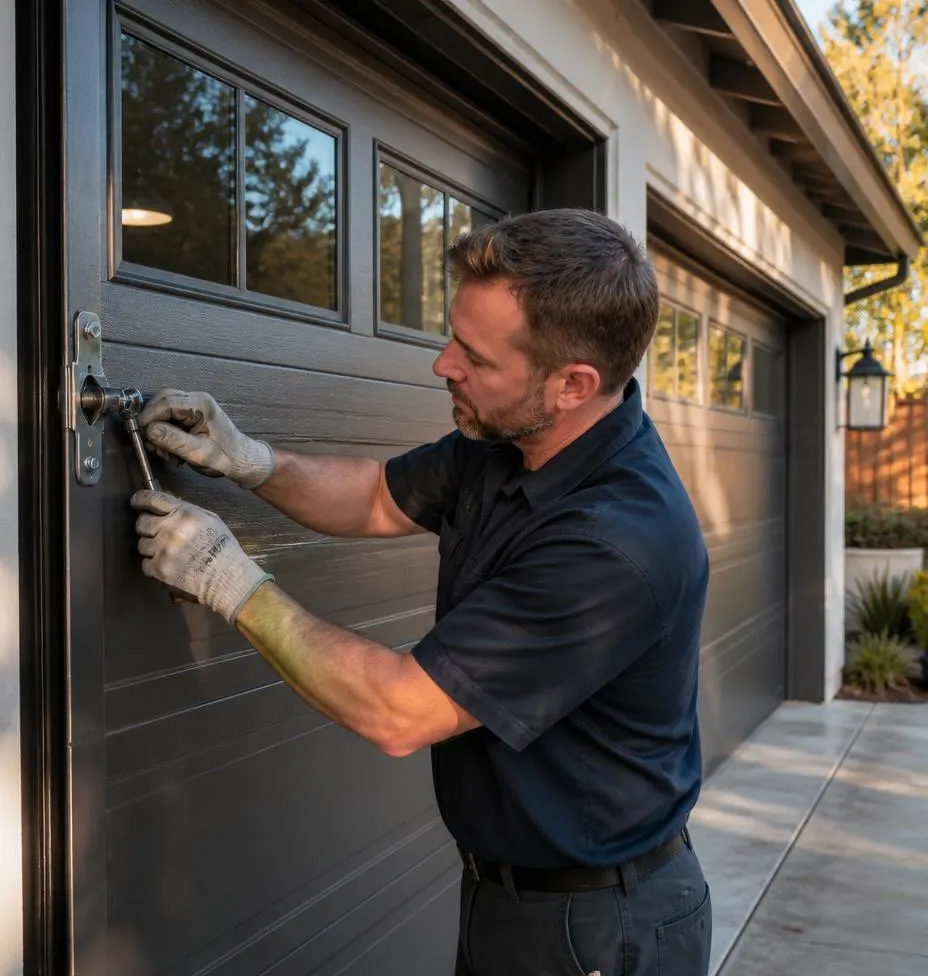
Short answer: retrofit the safety features on the opener and any exposed hardware, but leave a sound door panel and properly aligned track alone. If your opener doesn't have photo-eye sensors or doesn't reverse when it hits something, that's not a style debate, that's a safety gap you fix regardless of how old or new the rest of the door is. Everything else is a judgment call based on condition, not age.
Why the Age of the Door Isn't the Real Question
A door from 1992 isn't automatically dangerous, and a door from 2015 isn't automatically safe. What matters is which specific parts have changed because of hard lessons learned, and whether your setup has those updates. Two things changed federal safety requirements for residential garage door openers: photo-eye sensors (required since 1993) and auto-reverse mechanisms that stop and reverse the door if it meets resistance. If your opener predates those standards and was never upgraded, that's the part of the argument your spouse is right about.
What to Retrofit Now
- Opener without photo eyes: These are the two small sensors mounted a few inches off the floor on either side of the track. If you don't see them, or they're unplugged because they kept throwing false alarms, the door can close on a kid, a pet, or a car bumper without stopping. This gets fixed immediately, either by adding a compatible sensor kit or replacing the opener.
- No auto-reverse function: Test it by placing a 2x4 flat on the ground where the door closes. If the door doesn't reverse on contact, the opener needs to be replaced. Don't try to adjust around this one.
- Exposed torsion springs with no containment cable: Springs under tension that aren't secured can whip violently if they fail. A containment cable or a shaft-mounted spring system with a safety cable costs little compared to what happens if a spring lets go near someone standing in the garage.
- Old chain-drive openers with worn gear sets: These tend to slip or stop mid-cycle, which isn't just annoying, it's a sign the mechanism is wearing toward failure. If the opener is original to a 1990s door, the motor and gears have likely outlived their realistic service life.
- Remote-only openers with no rolling code: Fixed-code remotes can be cloned with inexpensive equipment. If your remote still uses dip switches instead of a rolling code, upgrading the opener closes an easy entry point.
What's Fine to Leave Alone
- A solid wood or steel door panel that still operates smoothly: If it's not cracked, warped, or sagging, and the hardware fits it correctly, there's no safety reason to replace it just because of its age. Cosmetic wear is not a safety issue.
- Original tracks, as long as they're aligned and not bent: Older steel track is often heavier gauge than some newer budget installs. If the door rolls smoothly without binding or popping off the rollers, leave it.
- Manual locks or slide bolts: These are fine as a secondary security measure even on an automatic door, as long as someone remembers to disengage them before running the opener.
- Non-insulated doors, if your garage isn't heated or finished: Insulation is a comfort and energy upgrade, not a safety one. It's worth considering before a Morgan County winter if you use the garage as a workspace, but it's not something to force just because the door is old.
Where Local Weather Changes the Calculus
Cold winters with ice and road salt are hard on older hardware specifically at the bottom seal and the rollers. If the bottom weatherstrip is original from the 1990s, it's almost certainly cracked or compressed flat, letting in meltwater and salt spray that corrodes the bottom bracket and track. That's an easy, inexpensive retrofit regardless of what you decide about the rest of the door. Humid summers and spring storm season put more strain on springs through daily expansion and contraction, which is a reason to have an older spring system inspected rather than just going by the "it still works" test. A spring can look fine until it doesn't.
When to Call Mooresville Garage Door
If you're not sure whether your opener meets current auto-reverse and sensor standards, or you've got an older torsion spring setup without a containment cable, that's worth a visit from a technician rather than a guess. We handle garage door opener repair and installation for exactly this situation, swapping out an outdated unit for a modern one with proper safety sensors while reusing hardware that's still sound. We also do spring replacement with the containment cable included, so you're not left with an old system that's one failure away from a problem. We'll tell you straight which parts of your 1990s door are fine to keep and which ones need attention, no upsell on things that don't need it.
If you're in Mooresville, Martinsville, Plainfield, or anywhere else in Morgan County and you want an honest read on your older garage door, give Mooresville Garage Door a call. We'll settle the argument for you.