
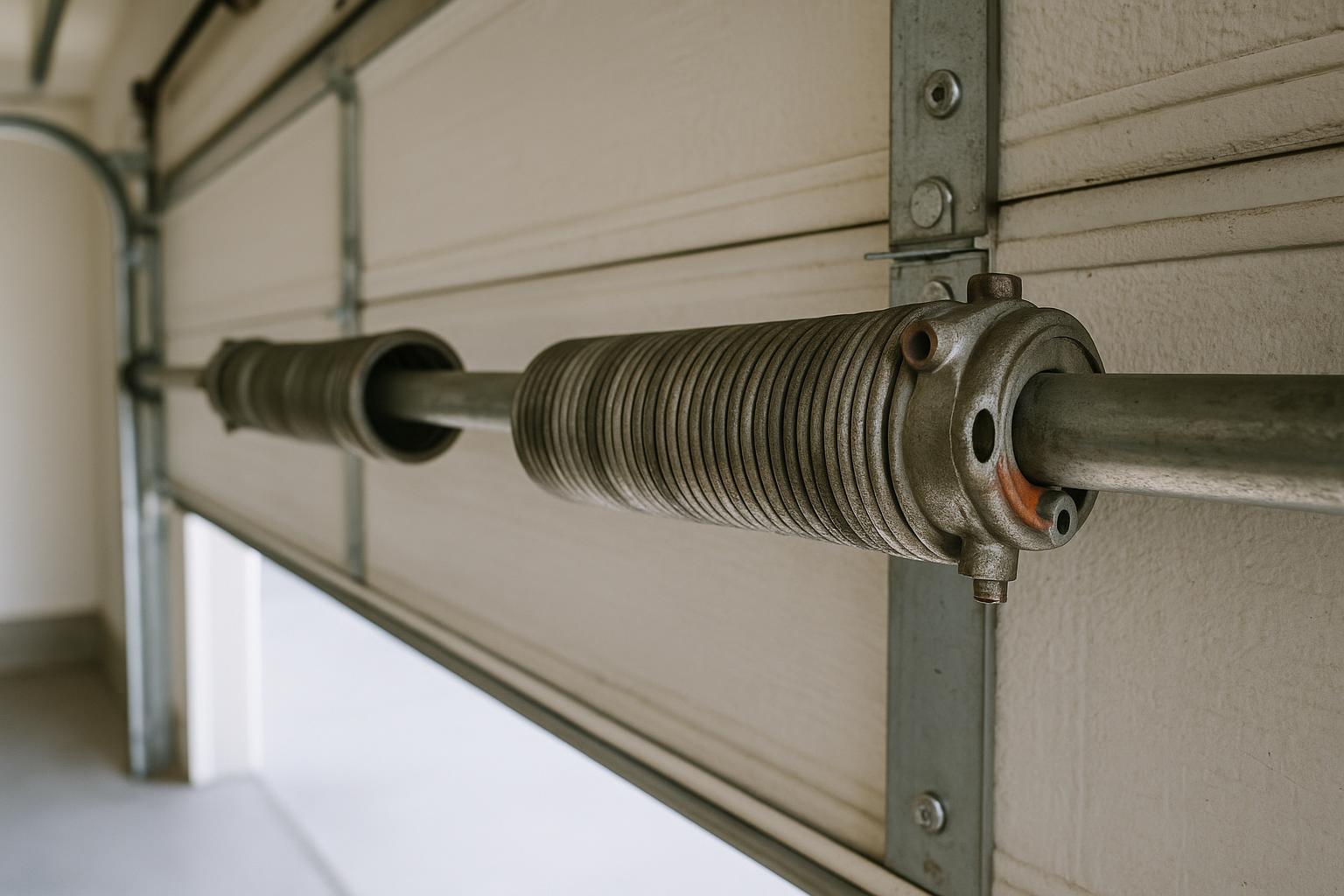
Your Garage Door Springs Are Doing More Work Than You Think
Most homeowners in Mooresville don't think much about their garage door springs — until something goes wrong. But here's the truth: those tightly wound springs above your door are responsible for doing the heavy lifting every single time you open and close your garage. A standard two-car garage door can weigh anywhere from 150 to 250 pounds, and without properly functioning springs, your opener alone can't handle that load.
So how often should you replace your garage door springs? And how do you know when they're starting to wear out? Let's break it down so you can stay ahead of the problem instead of getting stuck with a door that won't budge on a Monday morning.
Understanding the Two Types of Garage Door Springs
Before we talk about replacement timelines, it helps to know what kind of springs your garage door uses. There are two main types:
- Torsion springs: These are mounted on a metal shaft above the garage door opening. They use torque to lift the door and are the more common type found on modern residential garage doors in the Mooresville area.
- Extension springs: These run along the horizontal tracks on either side of the door. They stretch and contract to assist with lifting. They're more common on older or lighter doors.
Both types wear out over time, but torsion springs generally last longer and offer smoother, more balanced operation. If your home still uses extension springs, you may want to consider upgrading to torsion springs during your next replacement.
How Long Do Garage Door Springs Typically Last?
Garage door springs are rated by cycle life. One cycle equals one full open and one full close of the door. Here's a general breakdown:
- Standard torsion springs: approximately 10,000 cycles
- High-cycle torsion springs: 25,000 to 50,000 cycles or more
- Extension springs: approximately 10,000 cycles
Now, how does that translate into years? It depends on how often you use your garage door. If your household opens and closes the door four times a day — which is pretty typical for families in Mooresville — that's roughly 1,460 cycles per year. With standard springs, you're looking at about seven years of use before they reach the end of their lifespan.
If you use your garage door more frequently, say six to eight times a day, that number drops to four or five years. On the other hand, high-cycle springs can last 15 to 20 years or longer with moderate use, making them a worthwhile investment for homeowners who want fewer headaches down the road.
Warning Signs That Your Springs Are Wearing Out
Springs rarely fail without giving you some warning signs first. Here's what to watch for:
The Door Feels Heavier Than Usual
If you disconnect the opener and try to lift the door manually, it should feel relatively light and easy to move. If it feels noticeably heavy or difficult to lift, your springs may be losing tension and nearing the end of their life.
The Door Opens Unevenly
When one spring weakens faster than the other — or if only one spring has broken — the door may tilt to one side as it opens. This puts extra strain on the opener, the tracks, and the remaining spring, which can lead to bigger problems.
Visible Gaps in the Spring Coils
Take a look at your torsion spring when the door is closed. A healthy spring has tightly wound coils with no visible gaps. If you see a gap or separation in the coils, the spring has likely broken and needs immediate replacement.
Loud Bang From the Garage
Many homeowners in Mooresville and the surrounding Morgan County area have told us they heard a loud bang coming from the garage, almost like a firecracker. That sound is often a spring snapping. If this happens, do not try to operate the door. A broken spring under tension can be extremely dangerous.
The Opener Struggles or Stops Working
Your garage door opener is designed to work with the assistance of springs. When the springs fail, the opener has to bear the full weight of the door, which can cause it to strain, overheat, or stop working entirely. If your opener suddenly seems underpowered, worn springs could be the real culprit.
Can You Replace Garage Door Springs Yourself?
We get this question a lot, and the short answer is: we strongly advise against it. Garage door springs are under an enormous amount of tension. Torsion springs in particular can cause serious injury or even death if handled improperly. This is not a typical DIY project like changing a light fixture or replacing weatherstripping.
Professional technicians have the tools, training, and experience to replace springs safely and correctly. They also know how to properly balance the door afterward, which is critical for smooth operation and extending the life of your new springs and opener.
Should You Replace Both Springs at the Same Time?
If your garage door has two torsion springs and only one has broken, you might wonder if you can save money by replacing just the one. Technically, yes — but we always recommend replacing both springs at the same time. Here's why:
- Both springs were installed at the same time and have experienced the same number of cycles. If one has failed, the other is likely close behind.
- Replacing both ensures even tension and balanced door operation.
- It saves you the cost of a second service call when the other spring inevitably breaks weeks or months later.
Think of it like replacing tires on your car. You wouldn't put one brand-new tire next to one that's nearly bald. The same logic applies to your garage door springs.
How to Make Your Springs Last Longer
While springs will eventually wear out no matter what, regular maintenance can help extend their lifespan. Here are a few simple things you can do:
- Lubricate the springs: Apply a silicone-based or white lithium grease lubricant to your springs two to three times a year. This reduces friction and helps prevent rust, which is especially important during the wet Indiana seasons.
- Schedule annual maintenance: Having a professional inspect your garage door system once a year can catch early signs of spring wear before a full failure occurs.
- Minimize unnecessary cycles: Every open and close counts. If you're using your garage door as the main entry point to your home multiple times a day, consider whether some of those trips could use the front door instead.
- Keep the door balanced: An unbalanced door puts extra stress on the springs. If the door doesn't stay in place when you lift it halfway and let go, it's time to have the balance adjusted.
When It's Time, We're Here to Help
If your garage door springs are showing signs of wear or have already broken, don't wait. Operating a garage door with failing springs is unsafe and can cause damage to other parts of the system. At Mooresville Garage Door, we handle spring replacements throughout Mooresville, Martinsville, Plainfield, Brooklyn, Monrovia, and Camby. We keep things straightforward — honest pricing, reliable work, and no unnecessary upsells.
Whether you need an emergency spring replacement or want to schedule a maintenance check to see where your springs stand, give us a call. We'll get your door working safely and smoothly again.